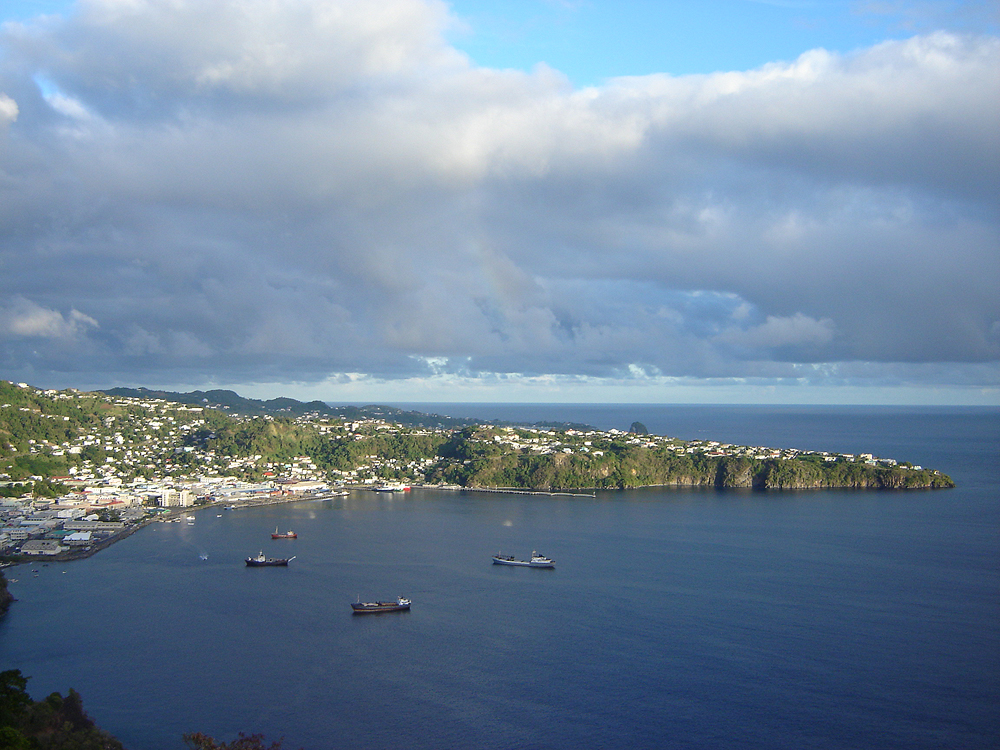
Broadly safe for most visitors, with only routine travel precautions needed. Public health and infrastructure are well developed.
Regional breakdown
The main island of Saint Vincent hosts the capital, Kingstown, and most government services. The south coast around Kingstown and Villa Beach holds the bulk of hotels, restaurants and the cruise berth. Petty crime, including bag snatching and break-ins, tends to cluster in busier urban pockets after dark. Travellers usually keep valuables out of sight and use licensed taxis at night. The northern third of Saint Vincent is shaped by La Soufriere. An active volcano that erupted heavily in April 2021 and forced evacuations of villages like Fancy, Owia and Sandy Bay. Hiking the volcano is popular, but conditions change fast. Walkers should check with the Seismic Research Centre and use a local guide before setting out. The Grenadines chain stretches south from Bequia through Mustique, Canouan, Mayreau, Union Island, Palm Island and Petit Saint Vincent. Several of these smaller islands are still rebuilding after Hurricane Beryl in July 2024. Canouan, Mayreau, Union Island, Palm Island and Petit Saint Vincent took the worst damage. Hotel capacity, ferries and small-plane links to these islands remain reduced in places, so travellers should confirm bookings directly before flying in.
Recent advisory changes
The official advisory guidance last updated its advice for Saint Vincent and the Grenadines on 10 December 2025. The latest change added information for dual nationals returning to the UK in the entry requirements section. The official advisory guidance does not warn against travel to any part of the country right now. The official advisory guidance keeps Saint Vincent and the Grenadines at Level 1, Exercise Normal Precautions, the lowest of its four tiers. The current notice flags that Canouan, Mayreau, Palm Island. Petit Saint Vincent and Union Island are still recovering from Hurricane Beryl, with fewer hotels and transport options available. It also points to La Soufriere as an ongoing hazard and reminds visitors that the Eastern Caribbean hurricane season runs from mid-May through November. There is no ordered departure of US staff and no region-specific Do Not Travel zone.
What travellers should know
Hurricane season runs from June to November and shapes everything from flight schedules to insurance cover. Travellers visiting in that window should pick policies that cover named storms and trip disruption, and watch updates from the National Emergency Management Organisation. Outside the season, the bigger natural risks come from La Soufriere and from strong currents on exposed Atlantic-facing beaches on the windward coast. The islands run on the East Caribbean dollar, and card acceptance is patchy outside Kingstown and the larger resorts. Carrying some cash helps on Bequia, Mayreau and other small islands. Driving is on the left, roads are narrow and steep, and a local permit is required. Healthcare is limited, especially in the Grenadines, so serious cases are usually flown to Barbados or Martinique. Comprehensive medical and evacuation cover is important. Same-sex relationships remain criminalised under colonial-era laws, even though prosecutions are rare, and LGBT+ travellers may want to review official advisory guidance guidance before booking.